
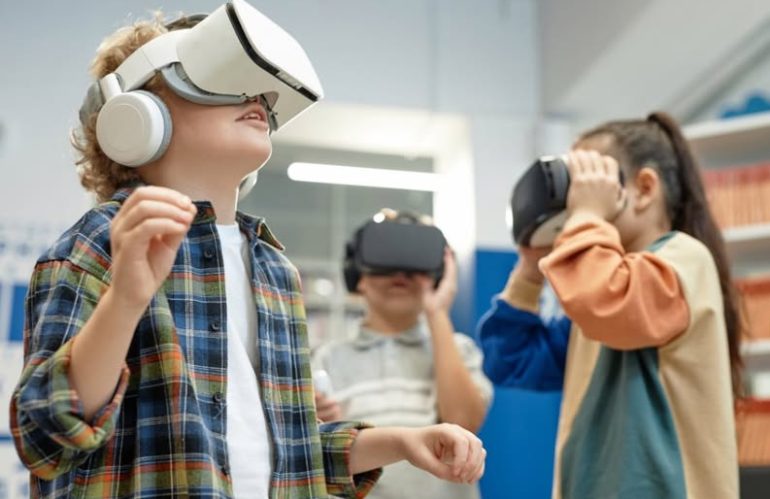
VR & ADHD: A Game-Changer for Learning & Well-Being! 
Virtual Reality (VR) is proving to be a powerful tool for children with ADHD, offering engaging ways to improve focus, emotional regulation, and cognitive skills. Through immersive experiences, VR helps create structured environments that make learning more interactive and effective.
 Ongoing research is shedding light on how VR can support neurodiverse children, and many projects across Europe are exploring its impact. One such initiative is KIDSWELL, an Erasmus+ funded project that aims to integrate VR into educational and well-being programs for children with ADHD.
 As part of this effort, a new article will soon be published, exploring KIDSWELL’s innovative approach and its potential benefits. Previous articles have already examined how VR can assist children with ADHD, and this next piece will dive deeper into the practical applications of these technologies.
 Until then check out previous studies by NetMedia lab NCSR Demokritos on how VR, mobile apps, and emerging technologies can assist children with ADHD.
If you want, follow for more studies about Educational Technology, Social and Emotional intelligence as well as neurodevelopmental disorders and inclusion
#VRforADHD#EdTech#Neurodiversity#KIDSWELL#ErasmusPlus#VirtualReality#InnovationInEducation#ADHDsupport